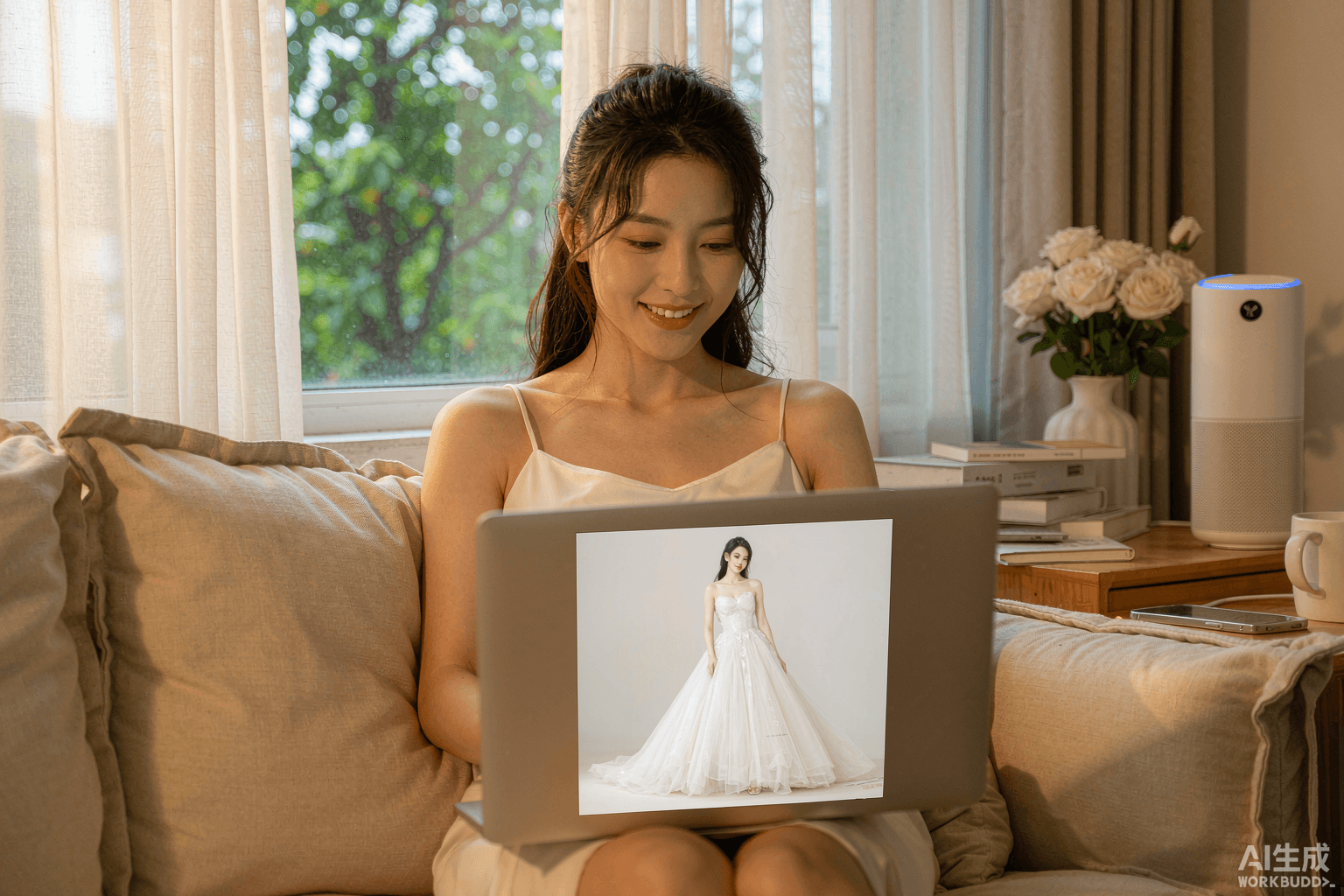
Your wedding dress is probably the hardest decision in the entire wedding planning process.
There are hundreds of styles. Necklines, silhouettes, fabrics, and embellishments combine into a shortlist that can easily run past a hundred dresses. And most brides walk into their first bridal shop without any idea of what actually suits them.
That is why "trying on wedding dresses at home" has become the starting point for more and more brides. No time off work, no rushed decisions in a fitting room, no pressure. Just you, your own space, and your own pace.
But there is more than one way to try dresses on at home, and each comes with its own trade-offs.
This guide puts the four main approaches side by side and walks through the honest pros and cons of each. By the end, you should have a clear idea of which one fits your current stage of planning.
Option 1: The In-Store Bridal Appointment
Strictly speaking, this one is not "at home," but it is the unavoidable final step of every try-on journey, so it belongs in the comparison.
Pros
Real fabric you can touch. The sheen of satin, the volume of tulle, the texture of lace — these details only reveal themselves in person. The same product photo can look completely different depending on the fabric used.
A professional stylist's eye. An experienced stylist can read your proportions at a glance and tell you which waistline adds height or which neckline flatters your shoulders. For a first-time bride with no frame of reference, this guidance is genuinely valuable.
The full styling picture. In-store you can try the petticoat, veil, and jewelry together and see the complete look rather than a dress in isolation.
Cons
High time cost. One appointment runs one to two hours, plus travel. Most brides manage two or three shops a day at best. Covering the full range of styles can eat an entire weekend.
Sales pressure is real. The person waiting outside the fitting room is paid to close the deal. You are not judging in a relaxed state, and being steered toward the dress the salesperson likes — rather than the one you like — happens more often than anyone admits.
Try-on fatigue. A gown plus petticoat, corset, and veil weighs several pounds. After the fifth outfit, most brides' judgment is visibly fading, which is exactly when bad decisions get made.
Location limits. Shops in smaller cities carry limited inventory. Seeing more options means traveling, and the cost keeps climbing.
Option 2: At-Home Try-On Programs
This is the service model that has grown fast in recent years. Brands like Azazie, Avery Austin, Luxe Redux Bridal, and Dare & Dazzle all work in roughly the same way.
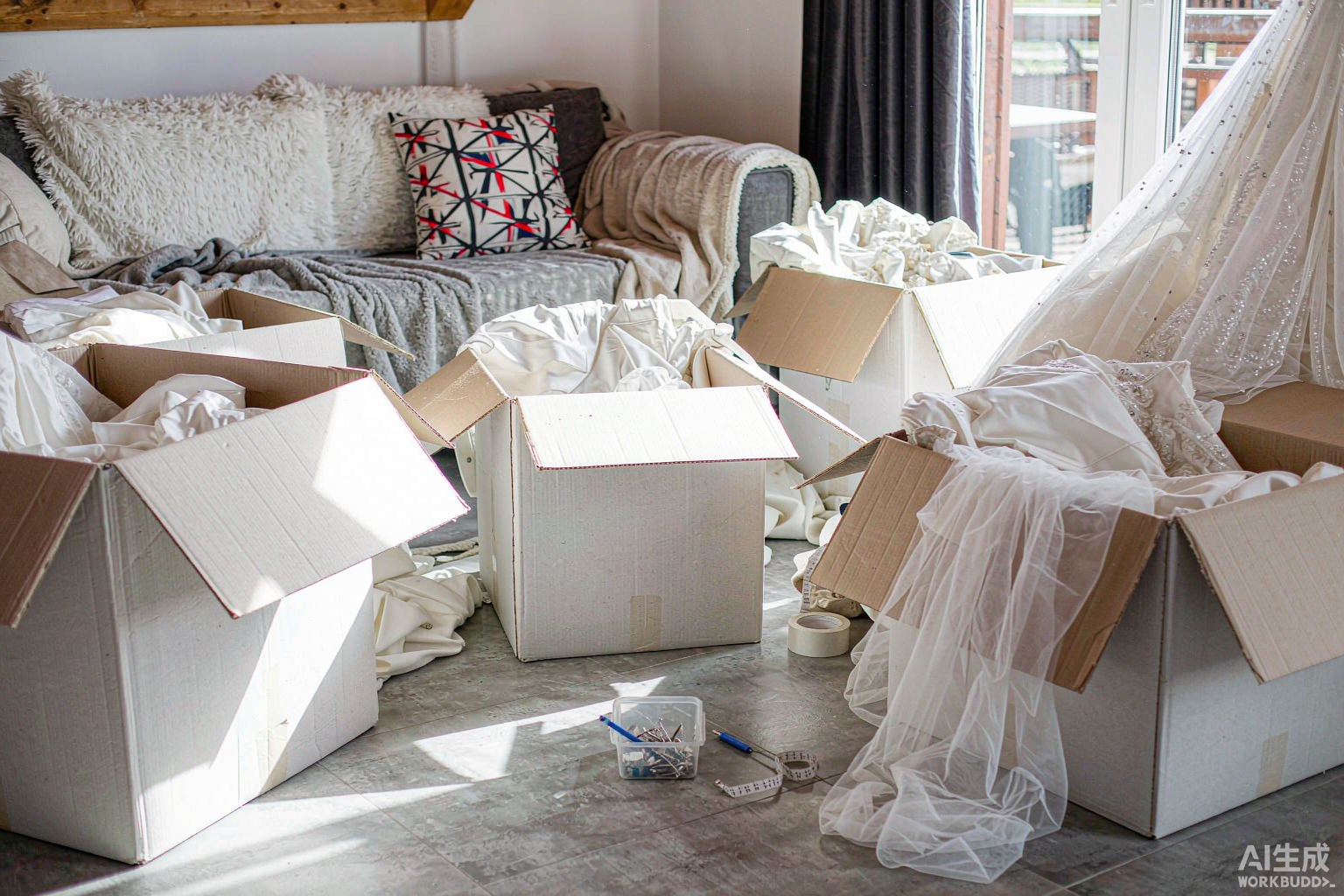
You pick a few dresses you like, the brand ships samples to your door, you try them on in your own space within a set window, then ship them back. The one you love, you buy.
Pros
A completely relaxed fitting environment. Your own carpet, your own lighting, your own music. Twirl as much as you want, record as many videos as you like, with no salesperson timing you.
A true sense of the dress on your body. This is what separates it from browsing photos. You see the actual hem length and where the waistline actually sits.
The people who matter can be there. Your partner, your mom, your best friends — all present, all giving feedback in real time. No bridal shop offers this decision-making setup.
Cons
Sample fees are a guaranteed cost. Azazie charges around $30 for three dresses; Avery Austin goes up to $45 per gown. Most brands credit the fee toward a purchase — but only if you actually buy. Try everything and love nothing, and the fee is sunk cost.
The try-on window is short. Most brands allow about three days. That sounds reasonable until you subtract work hours, repacking time, and the return shipment. The real deliberation window is small.
Slow shipping round trips. Back-and-forth shipping plus processing typically takes the better part of a week. If your timeline is tight, or you want multiple rounds, there simply is not enough time.
Limited sample sizes. The size that arrives depends on stock, not your measurements. Judging a style through an ill-fitting sample amplifies every error.
Strict return conditions. Tags stay on, packaging goes back exactly as it came, and stains or damage mean penalties. The whole process keeps you on edge — which contradicts the "relaxed at-home try-on" promise.
Option 3: Buy Online and Return What Doesn't Work
The bluntest approach. Order the dresses, try them at home, send back the ones that miss.
Pros
The widest selection. E-commerce platforms carry far more styles than any physical store or sample program, across every price point from budget to couture.
The simplest process. No appointments, no applications. Order and wait for the delivery.
Cons
Hidden costs of returns. A wedding dress is a bulky item. Unboxing, trying, repacking, and scheduling pickups takes half a day per round. A few rounds in, you are exhausted before you have decided anything.
Return policy risk. Many retailers apply special rules to formal wear — every tag, dust bag, and freebie must be intact, and some made-to-order styles are final sale. Skip the fine print and you find out how painful a return can be.
Cash tied up. You pay in full up front and wait for refunds. Buying several dresses at once means thousands of dollars floating in limbo.
Emotional drain. Opening a package full of hope and finding an unflattering fit stings. Stack up enough of those moments and your decision-making patience erodes. Plenty of people end up keeping not the dress they loved most, but the one they were too tired to return.
Option 4: AI Virtual Try-On
This is the newest option, and the one evolving fastest.
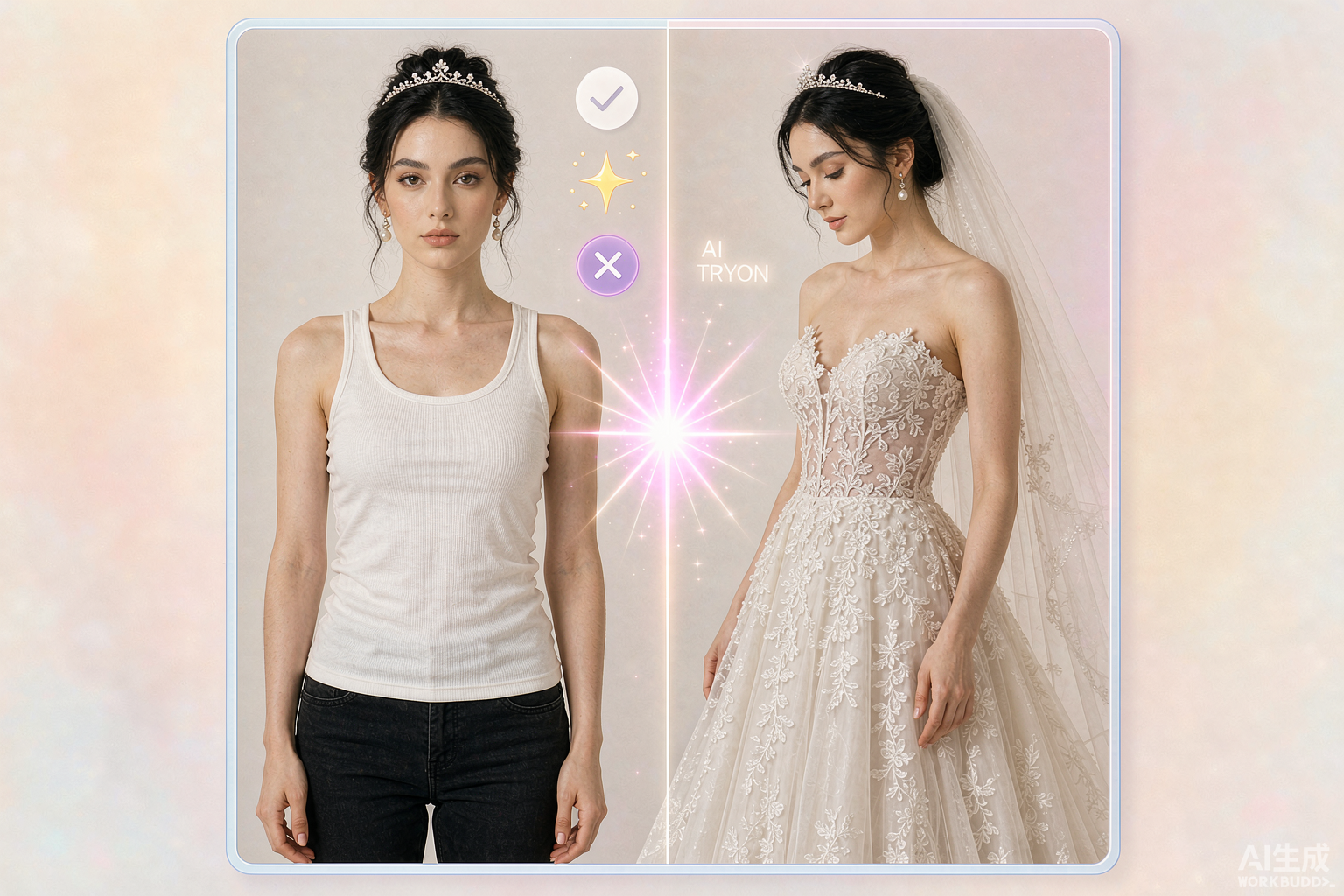
With VFitly, the AI virtual fitting room workflow takes three steps. Upload one clear, front-facing photo of yourself, add an image of the dress you want to try, and the AI generates a preview of you wearing that gown.
Pros
No sample shipping or dress deposits. You can explore styles without ordering physical dresses. AI generation uses credits; check VFitly pricing for current allowances and costs.
Explore at your own pace. There is no physical sample return deadline. Revisit your shortlist as your taste shifts, with preview availability depending on your remaining credits and applicable usage limits.
A virtual wardrobe for your shortlist. Save clothing images and favorite previews, then organize your wardrobe with categories, colors, and tags. Taste evolves — today you love mermaid silhouettes, next week an A-line photo changes your mind. A wardrobe you can revisit helps you compare ideas over time.
Dynamic video previews. VFitly can turn a generated try-on image into a short AI video to explore the look in motion. This is a generated visualization, not a measurement of the real gown's movement or fit.
Filter first, try later. Download your AI previews and share them with your partner, family, and friends for feedback. Once the shortlist shrinks to three or four dresses, take that list to a store or a sample program for final verification.
Understand how your photos are handled. Review VFitly's privacy policy before uploading personal images.
The honest limits
There are three things AI try-on cannot replace.
Fabric. A generated image cannot tell you how the tulle feels, how the satin drapes, or how thick the lining is. Those answers live in your hands.
Sizing. AI delivers a visual preview, not tailoring. Whether the dress fits and whether it needs alterations can only be confirmed in a real fitting.
Real movement. However smooth the video preview, it is not your body actually walking, turning, and dancing in the gown.
So the right way to position AI try-on is as a filtering tool for the early stage of your decision — not the final acceptance test.
The Combined Approach We Recommend
These four options are not mutually exclusive. Sequenced well, they save you the most time and money.
Step one, use AI virtual try-on for the wide sweep. Preview the dresses that catch your eye, within your available credits, and use the results to build a manageable shortlist.
Step two, use social voting to narrow down. Send those five previews to your partner, family, and friends. Collect the feedback and cut the list to three.
Step three, use an in-person fitting for the final call. Take those three styles to a bridal shop or a sample program and verify the fabric, the size, and the fit in real life.
The principle is simple. Reserve the most expensive steps — travel, shipping, deposits — for the shortest shortlist, and use the cheapest steps — AI previews and friend feedback — across the widest field.
Frequently Asked Questions
What is the cheapest way to try on wedding dresses at home?
AI virtual try-on can be a low-cost starting point because there are no physical sample or shipping fees. Generation costs depend on credits and plans; review current pricing. Physical sample costs and refund policies vary by retailer.
Are AI wedding dress try-on results accurate?
AI generates a visual preview of the dress on your body. For judging whether a style, color, or overall look suits you, it is highly useful. It cannot confirm sizing or fabric, and those two answers still require a real fitting.
If I use an at-home try-on program and buy nothing, do I get the sample fee back?
Most brands do not refund it — the fee only credits toward a full-price purchase from that brand. Before requesting samples, make sure you genuinely intend to buy from that brand, or the fee is almost certainly lost.
Can I combine these methods?
Yes, and we recommend it. AI filtering plus social voting plus an in-store final fitting is the most efficient path available today.
Try On Your First Wedding Dress Today
If you are at the stage of "I have no idea what suits me," starting with AI virtual try-on can help you explore your options.
Open VFitly's virtual fitting room, upload one clear front-facing photo, and pick a dress to create your first preview. Save favorite looks to your virtual wardrobe as you build your shortlist.
Check your available credits before generating. No physical sample return countdown.
Your wedding dress shortlist deserves an easier starting point.